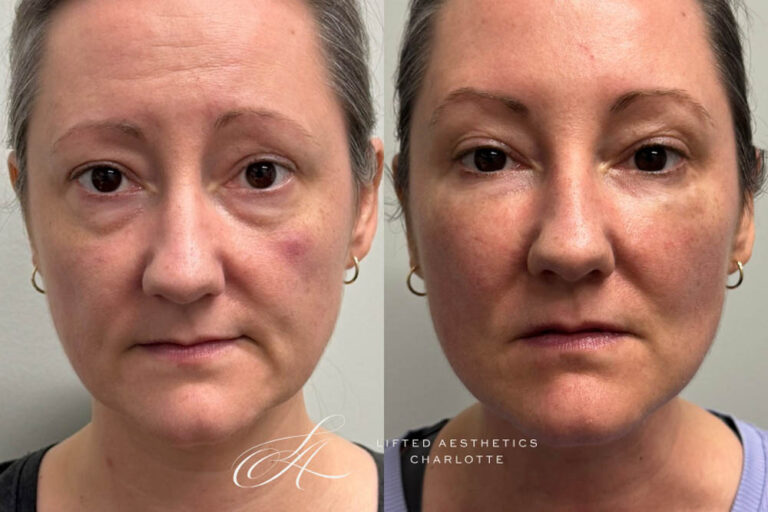
Sculptra Radiesse: Which Treatment Fits You?
A face can look less defined for more than one reason. Some people notice broad, gradual hollowing through the cheeks or temples. Others see a softer jawline, deeper folds around the mouth, or skin that feels thinner and less resilient. Sculptra Radiesse is a common comparison because both treatments can support collagen and provide a more structural approach than traditional hyaluronic acid filler. They are not interchangeable, however.
The right choice depends on the area being treated, the quality of your skin, your existing facial volume, how quickly you want to see change, and whether your goal is diffuse collagen restoration or more immediate contour. A thoughtful assessment matters more than choosing a product by name.
Sculptra vs. Radiesse: the direct answer
Sculptra and Radiesse are injectable biostimulators, meaning they are designed to encourage the body’s own collagen response over time. Sculptra is made with poly-L-lactic acid, while Radiesse is made with calcium hydroxylapatite microspheres suspended in a gel carrier.
In practical terms, Sculptra is often selected for gradual, broad volume restoration and long-term collagen support. Radiesse may be selected when a patient needs more immediate structural definition in an appropriate area, or when it is diluted to support skin quality. Either product may be used in ways that are outside its specific FDA-approved indications, depending on the treatment area and clinical plan. Your provider should discuss this clearly before treatment.
Neither treatment is simply a substitute for every type of filler. For precise lip shaping, tear-trough correction, or a small, highly targeted contour adjustment, hyaluronic acid filler may be the more appropriate tool. Learn more about the role of dermal fillers and facial balancing in a comprehensive treatment plan.
What Sculptra does best
Sculptra is usually considered when the face has lost generalized support rather than one isolated feature needing correction. It can be especially useful for patients whose cheeks, temples, lower face, or overall facial framework appear gradually flatter or more hollow than they once did.
The initial fullness after treatment is partly related to the sterile water used to reconstitute the product. That early fullness fades, then collagen production develops gradually. This makes Sculptra a fit for patients who prefer a subtle progression rather than a dramatic next-day change.
A series of sessions is commonly needed, with the number and spacing determined by anatomy, baseline volume loss, and goals. Results develop over several months, and maintenance is individualized. Sculptra is not intended for lips or the under-eye area, where the product characteristics and anatomy require different considerations.
Sculptra can be appealing for women and men who want to look less depleted without looking newly filled. The outcome should be a face that appears more supported and rested, while remaining recognizable.
Where Radiesse may make more sense
Radiesse has a gel carrier that can create visible correction at the time of injection, followed by a collagen-stimulating effect. In appropriately selected facial areas, that immediate support can be useful for concerns such as deeper folds or a need for stronger contour.
Its calcium-based composition gives Radiesse different handling characteristics from both Sculptra and hyaluronic acid fillers. It is often considered for areas that benefit from structure, but it is not typically used in the lips or under-eyes. Those are delicate areas where precision, movement, tissue thickness, and reversibility must be carefully weighed.
Radiesse may also be diluted or hyperdiluted for skin-quality concerns in selected areas. In this approach, the goal is generally not to create a traditional filler effect. Instead, treatment may aim to support collagen, skin texture, and crepiness over time. This use can be off-label, and it is not right for every concern or every area of the body.
The differences patients notice most
The distinction between Sculptra and Radiesse is less about which is “better” and more about the type of correction being planned.
Timeline and visibility
Sculptra has a slower, more progressive timeline. Patients should expect the collagen-building process to unfold rather than judge their final result in the first few weeks. Radiesse can provide more immediate visible correction when used as a structural injectable, although the long-term collagen response also takes time.
Diffuse restoration vs. localized contour
Sculptra is often used when the goal is broad support across an area of volume loss. Radiesse can be useful when more localized definition or immediate structural support is appropriate. In many faces, the best plan is not exclusively one product. It may involve biostimulation in one area and a more targeted filler strategy elsewhere.
Reversibility and planning
Neither Sculptra nor Radiesse should be approached casually. Unlike hyaluronic acid filler, these products are not dissolved with hyaluronidase. That does not make them inappropriate, but it does make conservative dosing, detailed anatomy knowledge, and a measured plan especially important.
For a patient who is uncertain about added volume or new to injectables, beginning conservatively and reassessing may be wiser than trying to address every concern in one visit.
Who may be a candidate?
Healthy adults bothered by age-related volume changes, diminished facial support, or selected skin-quality concerns may be candidates after an in-person assessment. Good candidates understand that collagen stimulation is a process, not an instant transformation, and are comfortable with a plan that may develop in stages.
Treatment may need to be postponed or avoided in the setting of active skin infection or inflammation near the planned injection site. A history of significant allergies, autoimmune or connective-tissue conditions, prior filler complications, pregnancy or breastfeeding, certain medications, and a tendency toward abnormal scarring are all relevant discussion points. They do not automatically rule treatment in or out, but they deserve a careful medical review.
A provider should also assess whether apparent volume loss is truly the main issue. Sometimes skin laxity, sun damage, facial muscle movement, weight fluctuation, or bone structure is contributing more than lost volume. Adding product without identifying the underlying concern can create heaviness rather than harmony.
What treatment and recovery are like
Appointments begin with facial evaluation, photographs when appropriate, and a discussion of your priorities. The injector may use topical numbing, local anesthetic within the product, or both, depending on the treatment. Most patients describe pressure, brief pinching, or a sensation of fullness rather than prolonged discomfort.
Swelling, tenderness, redness, bruising, and temporary asymmetry can occur after either treatment. These effects are usually short-lived, but bruising can last longer for some patients. Your provider may recommend avoiding strenuous activity, excess heat, alcohol, and medications or supplements that can increase bruising when medically appropriate. Do not stop prescribed medication without guidance from the clinician who manages it.
Sculptra aftercare often includes a specific massage protocol. Follow the instructions you receive rather than relying on a generic rule online, since protocols can vary by treatment area and provider technique.
More serious complications are uncommon but possible with any injectable treatment. Persistent pain, blanching or unusual skin color changes, worsening swelling, signs of infection, visual symptoms, or any symptom that feels concerning requires prompt contact with your injector or urgent medical evaluation.
Can Sculptra or Radiesse be combined with other treatments?
Yes, when the combination is intentional. Collagen stimulators can address foundational support, while neuromodulators can soften expression lines and skin treatments can address texture, pigment, or laxity. For example, RF microneedling may be considered for selected patients focused on skin quality, while Botox or Dysport may help with movement-related lines that injectable volume cannot correct.
The timing of combination treatment depends on the areas involved, your skin, and the treatment plan. Stacking procedures simply because they are popular is not the same as building a coherent plan.
Choosing between Sculptra and Radiesse
The most useful question is not, “Which product lasts longer?” It is, “What is my face asking for?” A person with broad midface hollowing may benefit from a gradual Sculptra plan. Someone seeking selected structural refinement may be better suited to Radiesse. Another patient may need neither and may be better served by hyaluronic acid filler, resurfacing, skin tightening, or a combination approach.
For patients in Davidson, Lake Norman, and Charlotte seeking natural-looking injectable care, a consultation should leave you with more than a product recommendation. You should understand the reason for the recommendation, the expected timeline, the trade-offs, and what a conservative maintenance plan may look like. If you are considering collagen-stimulating injectables, schedule a consultation when you are ready to discuss your anatomy and goals with that level of care.